

Enfranchising Grief: Grief Stories Releases Children’s Grief and Loss Toolkit for Individuals, Parents, and Caregivers
FOR IMMEDIATE RELEASE:
Enfranchising Grief: Grief Stories Releases Children’s Grief and Loss Toolkit for Individuals, Parents, and Caregivers
Contact: Jessica Milette, Executive Director
Cell Phone: 416-569-2415
Email: jessica@griefstories.org
Website: www.griefstories.org
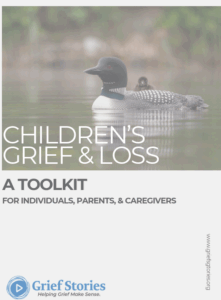 Grief is a natural experience, and is considered one of the most stressful life events a person can experience. 1 in 14 children under the age of 18 will experience the death of someone close to them. Every year, approximately 200 000 children are grieving the death of someone in their extended family or community. Grief doesn’t stay at home: it follows children throughout their life, and into the classroom with 1 grieving child in every other classroom in Canada. When grief impacts a community, support for grievers of all ages is important.
Children’s grief is often misunderstood due to myths about grief. Grief Stories is proud to announce the release of our Children’s Grief Toolkit for individuals, parents, and caregivers. This toolkit curates our content by healthcare professionals and those who experienced the death of a loved one between the ages of 6-12. It is our hope that this toolkit will empower adults in a grieving child’s community to support themselves and grieving children in their lives through loss.
Toolkits are becoming increasingly popular as a knowledge translation strategy for disseminating health and wellness information, to build awareness, inform, and change public and healthcare provider behaviour. Toolkits communicate messages to improve health and wellness and in changing practice to diverse audiences, including healthcare practitioners, community and health organizations, and policy makers.
Our children’s grief and loss toolkit pulls together our original multi-media resources about grief into an easy-to-access format which provide helpful information about the grief experience, stories of childhood experiences of loss, and helpful strategies to move through grief. This toolkit has been curated by mental health professionals for other helpers, for individuals, and their networks as they navigate grief and loss together. They are free to download and use. Grief Stories relies on donations to cover many operational costs, including content creation. If you, or someone in your life has found our content or toolkit helpful, please consider making a donation to Grief Stories (suggested amount $10).
You can download our Children’s Grief and Loss Toolkit for Individuals, Parents, and Caregivers HERE
About Grief Stories:
Grief Stories strives for a world where people in grief feel supported and connected. Our charitable nonprofit organization mobilizes the power of human connection through shared stories that help those experiencing grief feel connected, informed, supported, and hopeful. We create free resources about grief for people who are grieving, people supporting those in grief, and helping professionals. Our multimedia content aims to connect people who have been impacted by grief with hope, connection, stories, insights, and information. As a virtual resource, Grief Stories is privately accessible anywhere, anytime as a community health resource. All content is vetted by healthcare professionals.

Children’s Grief and Loss Toolkit (ages 6-12) [FREE Downloadable PDF]
Grief is a natural experience, and is considered one of the most stressful life events a person can experience. 1 in 14 children under the age of 18 will experience the death of someone close to them. Every year, approximately 200 000 children are grieving the death of someone in their extended family or community. Grief doesn’t stay at home: it follows children throughout their life, and into the classroom with 1 grieving child in every other classroom in Canada. When grief impacts a community, support for grievers of all ages is important. Children’s grief is often misunderstood due to myths about grief. Our children’s grief and loss toolkit pulls together our original multi-media resources about grief into an easy-to-access format which provide helpful information about the grief experience, stories of childhood experiences of loss, and helpful strategies to move through grief. This toolkit has been curated by mental health professionals for other helpers, for individuals, and their networks as they navigate grief and loss together. They are free to download and use.
You can download the toolkit here.
What is a Toolkit?
Grief Stories strives to create a free, accessible, diverse, inclusive, on-demand resource, reducing barriers to accurate online information about grief, helping grievers and those who support them using innovative technology. Our toolkits curate our multimedia content into an easy-to-navigate format on different topics, all vetted by healthcare professionals with expertise in grief and loss.
Toolkits are a popular knowledge translation strategy for disseminating health and wellness information, to build awareness, inform, and change public and healthcare provider behaviour. By keeping our content and toolkits free to access, we help individuals feel confident in connecting with and supporting grievers in their life, while at the same time providing accurate information about grief to help grievers make sense of their experience, one story at a time so they feel less alone.
As a virtual organization, we envision a world connected and supported in grief through our free multimedia library of content. Grief Stories relies on donations to cover many operational costs, including content creation. Each donation we receive allows us to share even more stories, helping grief make sense. If you, or someone in your life has found one of the toolkits helpful, please consider making a suggested donation of $10.00.
For less than the price of a premium streaming service, you can help us share our stories even further with those who need them most – helping grief make sense, one story at a time.

Left Out: Enfranchising Children’s Grief and Loss
By: Jessica Milette, MSW, RSW
All human beings have the capacity to grieve: people with intellectual disabilities, those living with a traumatic brain injury, and children of all ages. However, many people can experience disenfranchised grief when someone dies. Disenfranchised grief is generally grief that is not usually openly acknowledged, socially accepted or publicly mourned. Society disenfranchises grief and mourners by not recognizing one or more of the following: the relationship between the deceased and a survivor, the importance/impact of the loss, or the need to be a griever. Despite the fact that 1 in 14 children will experience the death of a parent or sibling in Canada, children are often left out of conversations about death, dying and grief further disenfranchising them.
In this post, we’ll break down some common myths about children’s grief, how they can disenfranchise children who are grieving, and some gentle strategies caring adults can use with grieving children.
Myth: Children do not have the capacity to grieve
Reality: Children do grieve, it just looks different
We grieve because we have a connection to the person who died. In infancy, babies make attachment connections with their caregivers. When children experience a death, or a change in this connection they will grieve. Based on a child’s developmental age and stage, how they express their grief will vary.
Tips:
-
Remember, children can express their grief in more physical ways such as experiencing some regression in milestones, like a child who has slept in their own room for some time may need to cosleep with their parent after a death.
-
Get creative with your child: they may not be able to clearly communicate in words but consider how they can play or create art to help them understand their grief and associated feelings?
Myth: Children should be excluded from memorials, funerals, and/or rituals to honour the deceased because it may be “too upsetting” or they will not “understand”
Reality: Children’s understanding of grief is different than adults. They should be given invitations to engage in rituals to honour the person who died
Children’s understanding about death and dying is more concrete, and becomes more nuanced and abstract as they age. Just like when supporting grieving adults, clear communication and honouring autonomy is important with children. Excluding children from the opportunity to participate in activities that honour the loved one’s memory can further disenfranchise children.
Tips:
-
Talk with your child in age appropriate ways about what to expect and what happens at the memorial ritual ahead of time.
-
Ask them in the days leading up, and on the day of the event if they wish to attend. Build a plan for your child to spend time with supportive loved ones if they wish to not attend the large gathering.
-
Be prepared with things that help your child feel supported, and provide opportunities for breaks to move and play outside during the day if they are becoming overwhelmed.
-
Honouring and remembering a loved one doesn’t stop at the funeral, create ways for you and your child to honour the person who died in ways that feel good to them.
Myth: Grief is a linear process that follows a timeline
Reality: Grief shifts and changes across a person’s lifetime, from childhood to adulthood.
As children move through different developmental ages and stages their understanding of grief evolves . All humans, including children can also experience regrief when they meet a milestone after their loved one has died.
For example, a child who had a parent die when they were 9, may experience intense grief reactions as they prepare to graduate from school, learn to drive a car, or have their own children.
Society also attempts to regulate how, when, and how long people may grieve. Suffocated Grief, a term coined by grief expert Tashel Bordere speaks about how a griever can feel punished for their natural expressions of grief. Children can be disenfranchised by teachers, being punished for physical reactions of their grief by being called “disruptive” and being sent to the office for discipline.
Tips:
-
When a child in your life is displaying atypical behavioural patterns, think about – could this be grief from earlier in their life showing up?
-
Continuing to share stories about the person who died with grieving children across their lifespan, creating space to ritualize them, and validating their emotions is important.
Myth: Children should be spared from seeing adults in their lives expressing their painful grief emotions
Reality: It’s important that children see others in their life grieving, and be validated that it’s okay to feel sad, mad, or any other emotion they are experiencing
Grieving adults are also facing deep pain, and we are often taught by society to keep it behind closed doors. Letting children in our life see us feeling sad, and coping with our grief in healthy ways role models to children that it is natural to feel and express grief with people who are caring.
Tips:
-
It’s okay to let a grieving child see a grieving adult feel sad or mad. You can let the child know that grief is natural and we can have different emotions because we miss the person who died.
-
Caregivers need care too. Consider exploring finding your own sources of support in addition to creating opportunities to share with your child about grief, such as using your own support network, exploring therapy, or joining a caregiver and child grief support group.
About Jessica Milette, MSW, RSW:
Jessica Milette is a passionate community-focused grief advocate, fostering change through a culture of collaboration, lifelong learning, best practices, and creativity to build a brighter and kinder future.
Jessica joined the Grief Stories Operations team in 2023, bringing over 15 years of experience providing grief and mental health peer support, in addition to being a registered social worker, practicing since 2018.
Jessica believes in the power of connection; within ourselves, with those who have died, those we are in relationship with, and with our greater communities. Through sharing our stories of grief and loss, we tend to our connection with those who have died and create meaningful connections with others.
Jessica is a white neurodivergent woman living on the traditional territory of the Anishnabek, the Haudenosaunee, the Attiwonderonk, and the Mississaugas of the Credit peoples, also known as Guelph, ON.

Quiet Hope: Healing as a Nurse, Mourning as a Mom
By: Yhaimar Barile
I’m a nurse. I’m a writer. And I’m a mom who lost her son.
Last year, shortly before his eighteenth birthday, my son Gabriel died unexpectedly. Everything changed after that. Life split into a clear “before” and “after.” The world around me kept moving, but mine stopped. Nothing looked or felt the same—not my family, not my work, not even myself.
Grief changes everything.
Nothing prepares you for the kind of loss that tears through every part of your life, including your work. I believed, like many others, that after a few weeks of grieving, I could go back to nursing. I thought life would find a new rhythm, even without my child. What I didn’t expect was how grief and trauma would reshape how I could (or couldn’t) show up for myself and for my patients. I wasn’t a nurse grieving a loss; I was a mother reckoning with the trauma of losing her son.
It soon became clear that returning to bedside nursing was impossible for me in that season. That realization marked the beginning of a profound and seemingly permanent shift in my path and identity. Nursing was my calling, but now I am rethinking how I can care for others, contribute, and find purpose despite losing my son.
Grief reshapes you. I was still a nurse—but I was also a mother in mourning, learning to survive something that felt impossible. Healing started there. It didn’t come from answers or quick fixes but from learning to treat myself with kindness.
Healing is being gentle with where I am.
Healing starts with gentleness. It means meeting myself right where I am, day by day. Healing from trauma and grief means knowing what my mind, body, and spirit need. Some days, that means moving my body or nourishing myself as best I can. Other days, it means resting or letting creativity speak through writing or art.
Healing is work, but not the hustle kind. It’s being intentional in caring for myself, trying when I can, and not judging myself when I can’t. Honoring even the smallest act of self-compassion is essential. This is how I rebuild, one gentle step at a time. In these small steps, I find the quiet strength of hope.
Hope is the act of showing up.
Hope, for me, doesn’t arrive with fanfare. It’s often quiet—the choice to keep showing up for myself and my family, despite my imperfections. Right now, hope means reaching for a new purpose: health content writing, connecting with those who understand loss, or honoring Gabe’s memory in ways that feel true.
Most days, hope means allowing the possibility of meaning to return, even in small moments. It’s trusting that my life and work can grow and change, and that honoring my grief is compatible with helping others.
If you’re walking through the trauma of grief, please know healing may feel like work, because it is. But it’s work that starts with gentleness and self-compassion. Hope doesn’t have to be grand. Sometimes, it’s simply the act of showing up. That is enough. You are not alone.
About Yhaimar Barile:
 I’m Yhaimar Barile (she/her), a nurse, writer, wife, and mother learning how to live after the loss of my son Gabriel, who died unexpectedly just before his eighteenth birthday.
Born in Venezuela and now living in Atlanta, I run Legacy Nurse Writer—a name that carries Gabe’s spirit and my hope to keep helping others in his memory. Grief changed everything, including how I care for others, how I work, and how I move through the world.
I’m raising my son David alongside three incredible stepboys. Most weekends, I’m at the soccer field, cheering on with quiet pride. Our Boston terrier, Luna, is always nearby, sensing when I need a nudge, or a reason to smile.
Lately, I’ve found comfort in glass fusing—turning broken pieces into something whole and beautiful. It’s become a kind of language for everything I can’t quite say.
What gets me through? Gentleness. Storytelling. Connection. I believe healing doesn’t mean moving on. It means carrying love with us and finding meaning in the process. Some days, just showing up is enough. And on the hardest days, I remind myself: even quiet hope counts.
Weaving the Tapestry of Love
Learning to become a better person is a wonderful consequence of being in a loving relationship with someone; you’re present in ways that help them grow into their best self. It’s an organic process you flow with on a journey we map out with intention, though in reality, it remains unknowable.
That is why a deeply loving relationship is like weaving a beautiful tapestry. You start with a blank canvas. With every experience a new thread is added—each a different color. The layers of time continue this process, including the good and troublesome of what life has to offer. The richness of color intensifies, fleshed out over the crucible of a relationship. In the end, if the kindness and beauty of love have been yours to share, you’ve woven a work of art.
My Uncle Sam had this type of relationship with his wife, Syl. Sam was remarkable for his easy-going nature. Syl, aka, “the little general,” was not even 5 feet tall, but formidable in demeanor. Sam and Syl had a long, happy marriage of 68 years.
When my uncle was 88, he began to develop some neurological symptoms. Medicine wasn’t working, so surgery was the next option. The day before surgery I was at the hospital. Sam was in good spirits; his usual affable self. I was in the room with just Syl and him. We talked about the upcoming surgery and then the conversation shifted: He said to Syl, “You know I love you” and remarked how beautiful she was. She laughed and rolled her eyes. Syl was being her usual self—a tough nut to crack. Sam was undeterred. He said he loved her now more than ever.
Sam continued to passionately express how much Syl meant to him. Syl smiled and her demeanor softened. I was so riveted by what my uncle was saying that I couldn’t tear myself away, even though it was such a personal moment between them. It was his love letter to her, and he was emphatic in wanting her to know.
After this intimate exchange, I immediately told my cousins about the amazing conversation between their parents. I was so grateful to have been present to bear witness and share the story. Sam spent the rest of the day alert and kibitzing with his family. When he came out of surgery the next day, he was in a coma and never regained consciousness. Sam died a month later. The words he uttered to his wife and family the day before his surgery were the last he ever spoke. Sometimes those who don’t have much time provide great gifts to the rest of us. Sam placed the final stroke on his masterpiece.
By Dr. Lisa Rosenberg
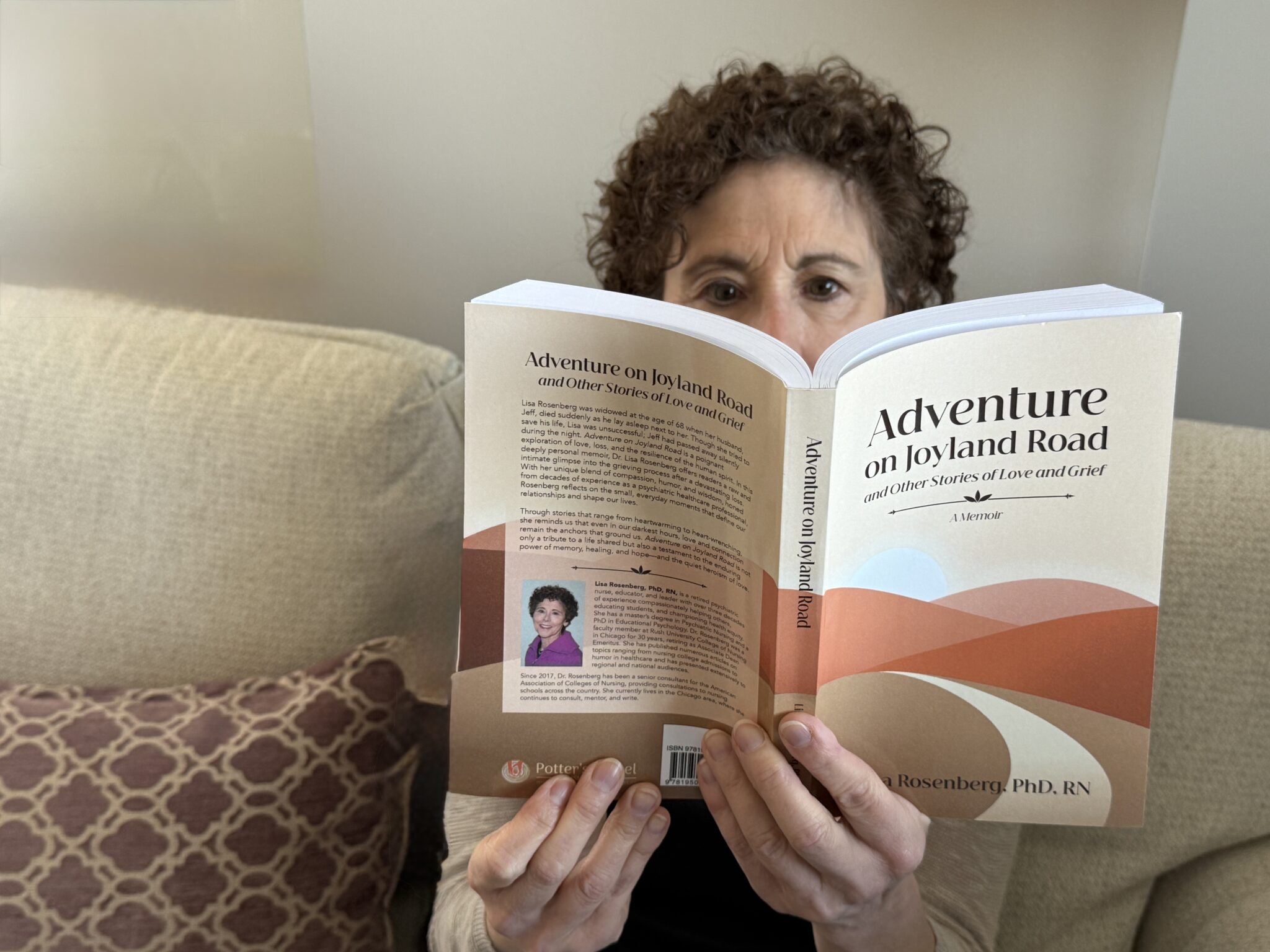
Dr. Lisa Rosenberg is a psychiatric healthcare professional, writer, and widow who never expected to navigate grief so intimately. When her husband, Jeff, died suddenly beside her in the night, she found herself confronting profound loss, love, and resilience—all of which she captures in her memoir, Adventure on Joyland Road and Other Stories of Love and Grief. With a career dedicated to understanding the human mind, Dr. Rosenberg blends deep psychological insight with personal storytelling to explore the lived experience of grief. Her writing is honest, humorous, and deeply compassionate, offering guidance to anyone who has lost someone they profoundly loved.
With a master’s in Psychiatric Nursing and a PhD in Educational Psychology, Dr. Rosenberg spent 30 years as a professor at Rush University College of Nursing in Chicago, retiring as Associate Dean Emeritus. Her career includes pioneering articles on humor in healthcare, extensive presentations, and, since 2017, senior consulting for the American Association of Colleges of Nursing. Based in the Chicago area, she writes, mentors, and consults, offering compassionate wisdom to those navigating grief.

You Can’t Always Get What You Want
“Happiness is a choice.” A friend of mine posted this quote on Facebook the other day. She then asked others what that quote meant to them. The responses were interesting and expected, and some were even inspiring. It’s so easy to say “I choose to be happy” when life is going well. On the other hand, when life has dealt you extremely difficult circumstances, like the loss of both of your parents and your spouse in a year, suddenly the choice requires a lot more effort.
I’m not saying it can’t be done. Some days I just really have to work at it. One of the things that made me the happiest in this world was my husband. I was madly in love with my Joe for all the days before he died, and I still am today. That is not a choice. It’s ingrained in me. His death didn’t lessen that love.
So, when someone says to me that I should “choose to be happy”, I hope they understand that it’s so much easier said than done. Choosing to be happy means choosing to enjoy this life without Joe. Enjoying this life without him means learning how to not feel guilty about that enjoyment. Not feeling guilty means choosing to let go. Even though I am still madly in love with my late husband, I am no longer married to him. Accepting that fact makes me sad.
Choosing to be happy is so hard when you are sad.
My friend was just asking for opinions, and in no way was her question directed at me. It just stirred up a lot of thoughts in my mind. The Rolling Stones were right, “You can’t always get what you want, but if you try sometimes, you just might find you get what you need.”
More than once in the last year someone has suggested that I should “choose to be happy”. If they read this, I hope they understand what it takes for a grieving person to do just that. And I hope they know that I am trying to find happiness amid the heartbreak every single day.
The ties that bind; grieving the loss of a sibling
When my three brothers and I were growing up and the proverbial hit the fan, Mum would often say, in a bid to keep her brood calm, ‘Well, at least we are all still here.’
She reminded me of this affectionate saying only very recently. I can still recall how I felt as a child when she said those words – a collective sigh of relief would ripple across our family unit and if I close my eyes tight enough as I type these words, I can still feel the tsunami of endorphins that quickly engulfed and soothed my young, innocent heart. I knew that in that moment – in the simplest of terms – that if we were all together, everything would be OK – nothing else mattered. It was us against the world. Until the day came when we weren’t all here anymore – and things were not OK. The day my brother, Louis Sydney Wilson died – 17th February 2019. The day when the six of us became five. When four siblings became three. The day when everything changed, and the earth seemed to flip on its axis.
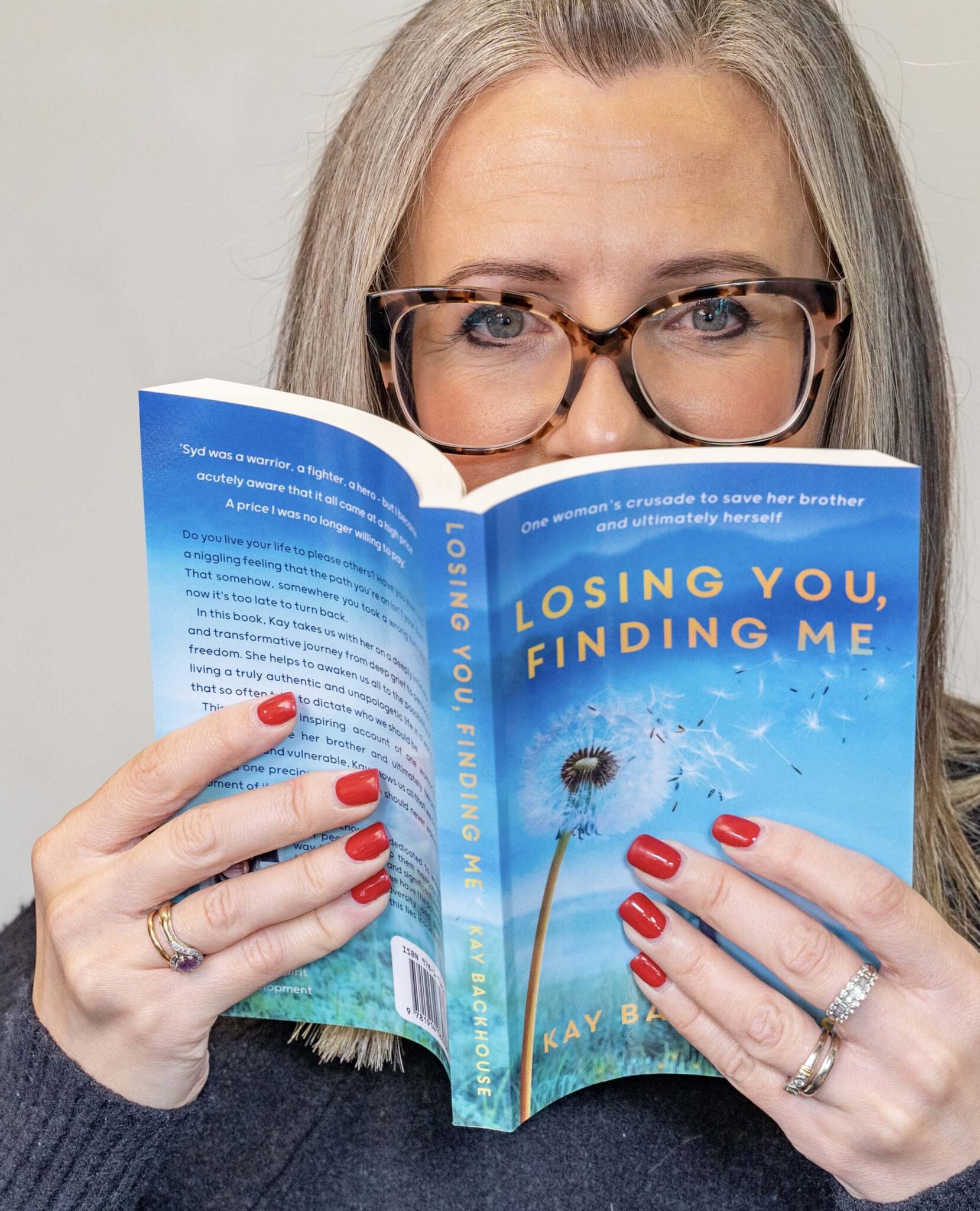
Syd – as he was affectionately known from around the age of seven – was my little brother, four years my junior. He was the last person in my family that anyone would ever have expected to receive a cancer diagnosis, let alone a terminal one. Growing up he was the sensible one of the four of us. He rarely drank alcohol, never smoked, or took drugs, recreationally or otherwise, never caused my parents sleepless nights like the rest of us and was always, well……the golden child – you know the one – most families have one. He was the happy-go-lucky kid, funny, and intelligent – not that he would ever think that about himself. And even if he did, he would never say it aloud. Growing up he towed the line in all aspects of his life – he was never promiscuous, rarely answered back and was a ‘good boy.’ He would later comment as he was nearing the end of his life that this was half the reason he ended up sick. For whatever reason he never felt he could fully express himself and became trapped in what I refer to in my book Losing You, Finding Me, as the ‘invisible cage’ – his life became a product of what he thought others expected of him rather than being true to himself. A trap many of us fall into and struggle to get out of.
When he died, the loss felt unbearable. It was as if I was missing a limb. I struggled to make sense of anything for the first twelve months. I experienced what felt like a never-ending black hole of grief that I didn’t think I could ever climb out of and in all honesty, I wasn’t sure that I even wanted to – there were times I wanted to die with him. You see that’s the funny thing about grief, as much as it’s painful, it can feel like our only direct connection to the person that has died. Without the pain there is no love. In many ways the more pain I felt the closer I was to him. There is a saying that ‘grief is the price we pay for love,’ and I genuinely believe this – they come in equal measure.
The sibling bond is like no other – it’s an undeniable connection – we quite literally share the same DNA. When we look at our siblings, we often see aspects of ourselves – the parts we love and, annoyingly the parts we hate. It’s the only relationship where we want to push them off a cliff edge and yet catch them at the same time. I witness this playing out in my own sons lives. So, when one of them dies, it’s like a piece of ourselves has evaporated alongside them. The rich tapestry of family life seems to come away at the seams – memories forever altered – every family photo now incomplete.
Now, don’t get me wrong, it wasn’t all roses – we were siblings at the end of the day, and as with all siblings, we had our moments. But they were rare. When we didn’t agree, rather than argue, we would just drift apart like boats cast adrift at sea, not speaking for a few years at one stage, right before his shocking diagnosis. That diagnosis in September 2011 (on his twenty-eighth birthday) was like a bomb going off at the centre of the ocean – and although shocking and destructive, I will always be grateful that beyond the wake our boats were gently guided back to the safety of the shore. We were back where we belonged – together. You see, a cancer diagnosis has a habit of clearing the decks, silencing the ego, and removing the bullshit we all hide behind at times – it laughs in the face of family trivialities and misunderstandings. I can recall being overwhelmed with both sadness and joy – sadness of the diagnosis and all that we had missed during those years spent apart, yet at the same time a sense of complete and utter joy of being reunited with my little brother once again. I have learned since his death that the sadness and joy we experience in life live near one another. It’s the reason we have so-called happy tears. We cannot have one without the other.
Grief affects everyone differently, and when it comes to siblings, we are often overlooked. In the wake of our parents’ unimaginable grief, it can be difficult to process or even prioritize our own emotions without a sense of guilt. Syd was my brother, not my child, so there were times I didn’t feel I had the right to grieve in the same way my parents did. And how would we all readjust to this new family dynamic without the golden child? Where was my place in the family hierarchy now? Did my remaining siblings feel the same way? And he left behind a son – losing a parent when you’re just twelve years old – isn’t that the worst?
The problem is we often compare our grief when there is no comparison. We must acknowledge, accept, and honour our grief – and the many complex emotions that come with it. We are all unique as human beings – as is our grief. I now know there is no hierarchy of grief. It’s ok to feel whatever comes or to feel nothing at all. We must not judge someone else’s grief or our own. And the rule is – there are no rules.
Learning to live without the physical version of my little brother has been unbelievably challenging. There are many times when I have wanted to give up, throw the towel in, and just give in to my overwhelming grief, but then I remember that his death gave me a precious gift – the gift of a second chance at life and I would be doing him a disservice by wasting it.
So now when I think of that saying Mum used to say, I remind myself that despite Syd’s death, ‘we are all still here.’ – it’s only the form that has changed. We will always be a family of six, and I now answer that sucker-punch question ‘how many brothers and sisters do you have?’ with a proud ‘three.’ – he may not physically be here, but his spirit will always be with me – this I know.
Our paths may have changed but our sibling bond will last forever.
Book recommendations:
‘Sisters and Brothers; Stories about the death of a sibling’ curated by Julie Bentley & Simon Blake.
Published by Unknown.
‘Losing You, Finding Me; one woman’s crusade to save her brother and ultimately herself by Kay Backhouse.
Published by 2QT Publishing.
’The invisible String’ by Patrice Karst.
Published by Hachette Book Group.
________________________________________________________________________________________
Kay Backhouse was raised in the Yorkshire Dales, a picturesque part of the UK. It was here where she developed a strong connection to, and an appreciation for nature and it’s healing properties.At the age of twenty-eight she emigrated to Australia where she lived with husband, Rick, and their children for ten years. Kay now lives with her family in the coastal town of Morecambe in Lancashire. Through her writing, yoga practise and hospice work, she spends most days working with adults and children, helping them to navigate their way through grief and significant loss. She truly believes that we have the potential to overcome any adversity and that the power to achieve this lies inside each and every one of us.
You can learn more about Kay and her book Losing You, Finding me here

Preparing For and Coping with Special Days
Special Days can be days we have honoured with our loved ones that many others celebrate or more personal dates and milestones with your loved one. As these days approach, it can be difficult to figure out how to move through a Special Day. Do you do what you’ve always done? What do you do if you just want to ignore the day? Special Days can bring up a lot of different emotions, triggers, and opportunities to honour the person who has died.
Why Can Special Days Feel so Hard?
While we are grieving, it can feel as if our world has stopped while the rest of the world seems so happy and carry on as if nothing has happened. After the death of a loved one, there are other transitions and losses we can be grieving while we grieve the death. We may be letting go of old roles while taking on new roles in our family. There may be changes in our relationships and dynamics with others.
Planning Ahead Can Help Us Prepare
There’s no “right” way to feel as a Special Day approaches. You may dread the event, feel on edge, be angry at the number of store displays triggering your grief, or find yourself honouring your loved one and feeling joy.
Planning can help lower anxiety and can help us feel more prepared to cope. Grief can change from moment to moment. If your plans need to change the day of, that’s okay too.
Involve your support network that you usually spend this time with, including children, in conversations about what they would like to do. Everyone is impacted by grief, no matter their age, ability, gender, race, or other identities. You can find more information on grief and supporting grievers with intellectual disabilities here and a post about supporting grieving children here.
Taking Care of Yourselves Through and After Special Days
You may find that your grief is heavier in the lead-up to the Special Day, on the Special Day itself, or that you may experience a wave of grief in the day(s) afterwards.
Here are some gentle reminders:
- You may not be able to do all the things you have done or had planned to do, but be compassionate with yourself. You are allowed to set boundaries around your capacity so you can give yourself plenty of care and rest during this time.
- Grief can impact us mentally, emotionally, and physically. We can find ourselves exhausted in different ways, especially after going through heavy days. Check out our tips on the different ways we can give ourselves rest and care as we grieve here.
- This time of year can have us grievers feeling more overwhelmed or lonely at this time of year. If it feels right, think about it and reach out to people in your network you find supportive. Asking for specific support helps our loved ones give us what we need. The 3 H’s can help us name what type of support we may be needing:
- Heard: To feel listened to, validated, without judgement
- Help: Problem-solving, practical support like cooking, cleaning, childcare, etc.
- Hug: Sometimes we don’t need words of comfort, but a comforting touch like a hug.
- There is no right way to feel on a Special Day. You are allowed to experience moments of joy and lightness on these days while also missing your loved one.
____________________________________________________________________________________
Jessica Milette, MSW, RSW. Grief Stories Healthcare Consultant
Jessica is a registered social worker and owner and of Cultivating Connections. Her expertise includes helping individuals and families facing anticipatory grief, ambiguous loss, disenfranchised losses, and sudden deaths. Jessica believes in the power of connection; within ourselves, with those who have died, those we are in relationship with, and with our greater communities. Through sharing our stories of grief and loss, we tend to our connection with those who have died and creating connections with others.
Jessica is a white woman living on the traditional territory of the Anishnabek, the Haudenosaunee, the Attiwonderonk, and the Mississaugas of the Credit peoples, also known as Guelph, ON.
Finding Joy During the Holidays After Loss When Everything Feels Awful: A message of hope.
My mother died in the middle of the night on January 1, four days before I turned sixteen. I don’t remember much about Christmas the couple weeks before she died, just that we spent a lot of that season in the ICU of the hospital where my mother had birthed my brother and I. For a decade after she died, I hated Christmas. Everything filled me with dread and heaviness. The lights, decorations, and music made my skin crawl- and they were inescapable. At the grocery store, at work, looking out my apartment window onto the main street of a small town. The traditions my family had grown up with weren’t things we did anymore. The holidays weren’t joyful, connective, or fun.
Now, I am thirty-three and the mother of two little humans. I have officially crossed the threshold of being alive longer without my mother than with her. My motherhood has come with many gifts and one of them has been finding joy during the holidays again. I’m writing this cozied in a bright red snoopy sweater that says “merry”. My partner and brother have matching ones. My older kid told me he wants to decorate our house with rainbow-coloured lights, so I bought a strand to hang on the weekend and a small wreath with red berries that reminded me of my mother. I hung the wreath on my front door and thought about how she probably would have hung the lights with my son the same day he had the idea if she were alive.
Last month, my cousin got married and had set up a table of pictures of family members who had died so they could be part of the big day. My beautiful mother was there, smiling brightly out of the frame. My kid noticed it, we have the same picture of her on our fridge. “It’s your mama! She died. We could bring her back and visit her at her house,” said my sweet four-year old. I remind him that death doesn’t work that way, but she lives in our hearts. The next day, he brought her up again and I told him a story about her. It doesn’t feel heavy, even though I still miss her. I feel grateful to feel her presence in our lives. Grief, though still present, changes over time.
If you are someone who is grieving during the holidays and can relate to the first part of my story, I want you to know that it might not feel that way forever. I also want you to know it’s okay to feel however you’re feeling- there are no rules in grief. Here are a few things I’ve learned about grief and the holidays:
Sometimes it can help to make new traditions.
When my older kid was old enough to enjoy Christmas for the first time, I asked my partner, my brother, and other family members if they had any traditions they wanted to start incorporating into the season. We’re still working on building these traditions with my kids, but things like Christmas Eve dinner with my aunt and uncle, Christmas morning with my dad, not wrapping Santa gifts, baking cookies, and hanging rainbow-coloured lights are all slowly becoming ways to find joy, intentionally, together.
- Don’t overextend yourself.
If you don’t want to participate in every (or any) holiday activity- don’t! I didn’t decorate for years, I still avoid malls between November 15-January 1, and there have been some years where I intentionally scheduled work things so I didn’t have to participate at all. It’s okay to be gentle with yourself when it comes to participating in holiday-related things while you’re grieving.
3. Giving can be healing.
I do a lot of my planned giving to charity during the holiday season. I use affiliate programs connected to a breastfeeding support organization I’m passionate about to buy gifts for family and friends, I make donations to organizations that are important to loved ones in their names, and I give to grief resources and hospices as I can. Knowing I am helping other people during a season that has traditionally been hard for me helps me feel connected and supports my continuous healing.
If you find support through the resources we create at Grief Stories, please consider helping us reach our fundraising goal this holiday season so we can continue to produce and distribute free grief resources. Giving is grief support. You can donate here.
___________________________________________________________________________________________
Alyssa Warmland is an interdisciplinary artist and activist. Her work utilizes elements of radical vulnerability, restorative justice, mindfulness, compassion, performance, and direct action.
She is a mother, La Leche League Leader, Board member of La Leche League Canada, writer, podcaster, producer, director, performer, content creator, not-for-profit administrator, and abstract visual artist. Lyss is a strong advocate for fumbling towards an ethic of care, especially when it comes to the topics of birth, matresence, and grief. Most of all, she’s interested in the way people choose to tell their stories and how that keeps them well.
Suicide Loss Toolkit [Free Downloadable PDF]
Approximately 4500 people in Canada die by suicide each year. That is approximately 12 people who die by suicide each day. In 2022, 49,476 Americans died by suicide. That’s 1 death every 11 minutes. On average, 5 people grieve for every death. That leaves over 250,000 people experiencing suicide-related grief and distress. Grief Stories has seen these impacts firsthand: suicide loss has been the most viewed topic on our Youtube channel all year. At Grief Stories, we passionately believe sharing stories and insights fosters connection, helping people cope with grief. Grief Stories is proud to announce the release of our latest toolkit titled: the Suicide Loss Toolkit.
Our suicide loss toolkit pulls together our original multi-media resources about grief into an easy-to-access format which provides helpful information about the grief experience, stories of suicide loss from survivors, and helpful strategies to move through grief. This toolkit has been curated by mental health professionals for other helpers, for individuals, and their networks as they navigate grief and loss together. They are free to download and use.
You can download the toolkit here.
What is a Toolkit?
Grief Stories strives to create a free, accessible, diverse, inclusive, on-demand resource, reducing barriers to accurate online information about grief, helping grievers and those who support them using innovative technology. Our toolkits curate our multimedia content into an easy-to-navigate format on different topics, all vetted by healthcare professionals with expertise in grief and loss.
Toolkits are a popular knowledge translation strategy for disseminating health and wellness information, to build awareness, inform, and change public and healthcare provider behaviour. By keeping our content and toolkits free to access, we help individuals feel confident in connecting with and supporting grievers in their life, while at the same time providing accurate information about grief to help grievers make sense of their experience, one story at a time so they feel less alone.
As a virtual organization, we envision a world connected and supported in grief through our free multimedia library of content. Grief Stories relies on donations to cover many operational costs, including content creation. Each donation we receive allows us to share even more stories, helping grief make sense. If you, or someone in your life has found one of the toolkits helpful, please consider making a suggested donation of $10.00.
For less than the price of a premium streaming service, you can help us share our stories even further with those who need them most – helping grief make sense, one story at a time.
Infant & Reproductive Loss Toolkit [Free Downloadable PDFs for Individuals and Professionals]
Navigating life, death, and loss can be overwhelming. Mental health professionals designed this toolkit for individuals, parents, caregivers, and families navigating perinatal and reproductive loss.
Reactions to pregnancy and reproductive loss are as unique as fingerprints. Some can process the experience relatively quickly, while others experience unrelenting pain and grief.
We hope that this toolkit can be used to add tools to your toolbox and offer words of support, guidance, and care as you navigate life after loss.
Download the Infant and Reproductive Loss Toolkit for Individuals HERE.
Navigating life, death, and loss can be overwhelming. This toolkit was designed by mental health professionals for other professionals who support individuals during their reproductive years and beyond.
It contains information about grief and navigating the impact of loss alongside your clients.High-quality grief care includes compassionate and open communication, informed choice and individualized care. Compassionate communication, the most important element, is required in all aspects of care throughout and following loss.
Download the Infant and Reproductive Loss Toolkit for Supporting Professionals HERE.
What is a Toolkit?
Grief Stories strives to create a free, accessible, diverse, inclusive, on-demand resource, reducing barriers to accurate online information about grief, helping grievers and those who support them using innovative technology. Our toolkits curate our multimedia content into an easy-to-navigate format on different topics, all vetted by healthcare professionals with expertise in grief and loss.
Toolkits are a popular knowledge translation strategy for disseminating health and wellness information, to build awareness, inform, and change public and healthcare provider behaviour. By keeping our content and toolkits free to access, we help individuals feel confident in connecting with and supporting grievers in their life, while at the same time providing accurate information about grief to help grievers make sense of their experience, one story at a time so they feel less alone.
As a virtual organization, we envision a world connected and supported in grief through our free multimedia library of content. Grief Stories relies on donations to cover many operational costs, including content creation. Each donation we receive allows us to share even more stories, helping grief make sense. If you, or someone in your life has found one of the toolkits helpful, please consider making a suggested donation of $10.00.
For less than the price of a premium streaming service, you can help us share our stories even further with those who need them most – helping grief make sense, one story at a time.
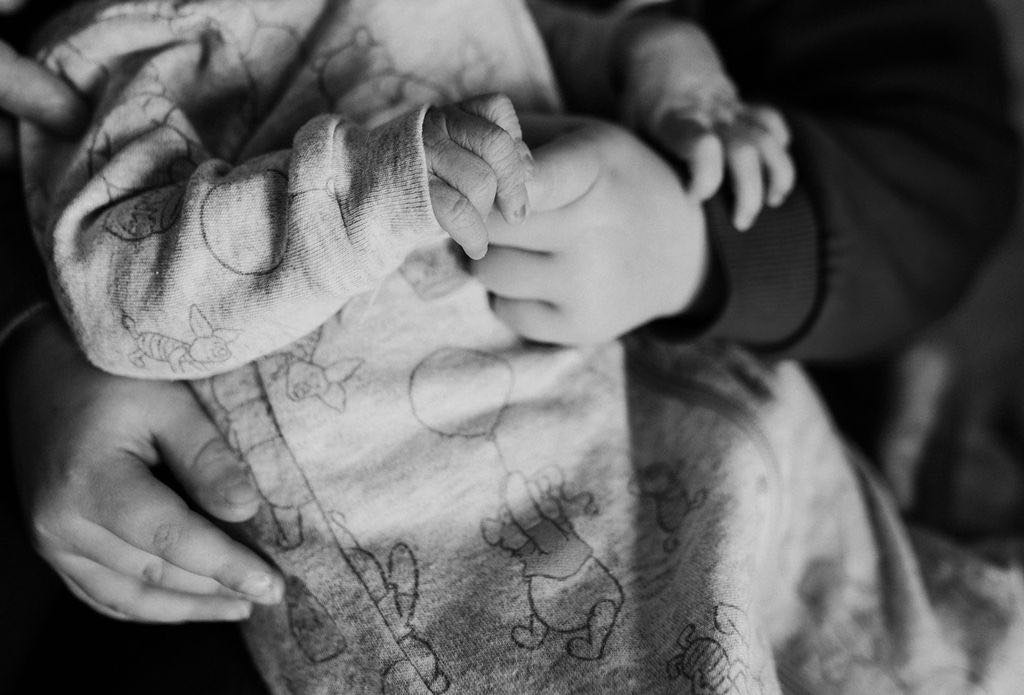
Grief, Breastfeeding, and Care
In this essay, I share a bit about my story of grief and breastfeeding. I also share some thoughts about the cultural grief some people are carrying about the lack of support afforded to lactating families whose goal it is to feed their baby from their body. I use some gendered language throughout this essay (ie. breastfeeding, mother/mom, etc.) because it is the language I use to describe myself and my experience. There are other great gender-neutral terms out there, some of which I have incorporated into this essay.
Read More